Iriarte
Ofrenda a la tormentaIriarte is an inspector and a central operational presence in the investigation surrounding the deaths of infants and the suspected removal of their bodies from family tombs. He brings the first case against Valentín Esparza to Amaia Salazar as a set of troubling particulars rather than a settled explanation: a death certified as sudden infant death syndrome, a grandmother’s recollection of an unexplained car, and an apparent discrepancy between the timing of the death and Esparza’s account. As the investigation widens, Iriarte coordinates practical inquiries, reports new evidence, and remains at Amaia’s side through mounting grief and danger. His final intervention, shooting Markina in the crypt, turns his steady police work into an act that saves Amaia’s life.
Identity and Introduction
Iriarte first appears amid a rain-soaked emergency, with a crowd pressing toward a patrol car and two officers struggling to establish a cordon around a backpack lying in a puddle. The weary-looking man inside the car is Valentín Esparza. Iriarte’s face reflects the urgency of the situation, but he is already trying to contain the crowd and manage the scene when Amaia arrives. She calls for reinforcements, while Iriarte continues attending to the people gathered around the car. The arrival of additional siren-lit vehicles briefly quiets the crowd; the danger and disorder of the scene are made concrete before the case is explained.
Iriarte then lays out the circumstances that brought Esparza under suspicion. Esparza’s four-month-old daughter had died during the night at the home of her maternal grandmother, Inés Ballarena. The doctor had certified sudden infant death syndrome, and the child had been staying with her grandmother for the first time because her parents were celebrating their anniversary. Inés had prepared a room, fed the baby, and put her to bed before falling asleep on a sofa in the adjoining room. She said that a noise woke her; she saw the child apparently sleeping, then heard a vehicle on the gravel outside and watched a large gray car drive away. She thought it might be Esparza’s, but initially gave the incident little weight.
The detail that made Inés reconsider the night was the doctor’s estimate that the child died between four and five in the morning, around the time of the noise and departing car. Esparza’s wife said the couple had returned home around one-thirty, while Esparza reacted nervously when questioned and dismissed the possibility that the car was his. Inés also stressed that her dogs, usually quick to bark at strangers, had remained silent. Iriarte presents these recollections as leads requiring investigation, not as proof. His account establishes the case’s tension between an official diagnosis and the small, remembered sounds that may challenge it.
Investigative Method and Expanding Case
Iriarte’s role repeatedly involves turning uncertainty into concrete checks. After the suspected opening of a grave, he reports that the Ballarena family’s last cemetery visit before noticing disturbance had been the previous afternoon. The gravedigger had not paid close attention to the grave, so the precise time the flowers were moved could not be established; nevertheless, the team believed the opening had probably happened during the night. Road patrols and routine checkpoints had been alerted, without results. The limits of those measures are stated plainly, rather than disguised as progress.
When those initial checks produce no answer, Iriarte identifies the narrowing options. Esparza and Berasategui are dead, and a renewed request for French judicial cooperation would be difficult to justify without a plausible connection between the men and the other bereaved families. The judge is unlikely to authorize opening additional infant graves on speculation alone. Iriarte therefore turns attention to Nurse Hidalgo, whom Amaia identifies as a possible link: she had assisted her brother, worked as a midwife with privileged access to pregnancies in the valley, attended supposed bereavement-support meetings at Argi Beltz, and had hinted at helping parents resolve the problem of bringing certain children into the world. The shift matters because it gives the investigation a living lead when its most obvious suspects can no longer be questioned.
The inquiry also proceeds through family histories and cemetery permissions. Iriarte later reports that a woman from Igantzi had been cooperative. She had divorced her husband, an architect whose fortunes improved after their only daughter died at one month old, before baptism. The mother believed he had left her because she refused to have another child; the girl lay in a family mausoleum, and her birth had taken place at the Río Bidasoa clinic while Nurse Hidalgo worked there. The team had visited the cemetery and arranged to request permission to open the tomb the following day. Iriarte also describes two cases in Hondarribia: one divorced woman suspected her daughter was not in the coffin after noticing something strange at the funeral, while another agreed to an examination of a tomb owned by her own family. These accounts show the investigation gaining traction through specific family circumstances and available legal routes, not through a single decisive confession.
Colleagues, Evidence, and Loss
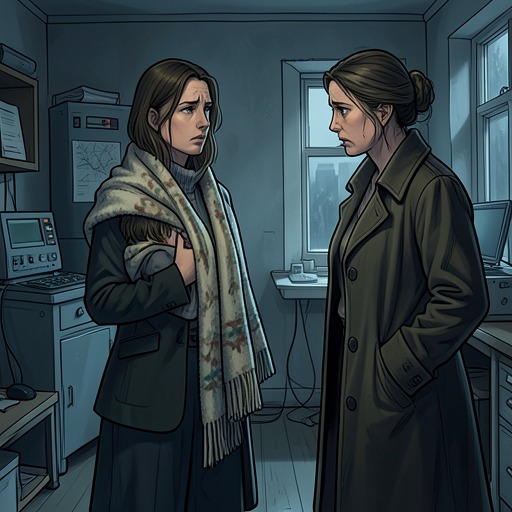
Iriarte’s working relationship with Amaia is both professional and attentive to the cost of the work. After Jonan Etxaide is killed, Amaia remains beside her friend’s body, unable to look away from the wounds or accept that he is dead. Iriarte approaches with Fermín Montes and asks her to leave the scene and let someone accompany her home. Amaia reacts with surprise and shakes off his hand. The exchange does not erase her grief; it shows Iriarte recognizing that the investigator has become a bereaved friend and trying, however briefly, to protect her from continuing to work through the immediate shock.
He also keeps the investigation moving in the aftermath. On a morning call, he tells Amaia that ballistics has matched the bullets recovered during Jonan’s autopsy to a pistol used in a Madrid nightclub doorman’s murder six years earlier. That weapon, linked to Eastern European mafias, had been found at the earlier crime scene and later disappeared from a Madrid court’s evidence store. The match supplies a concrete connection and a troubling history for the weapon, while leaving the chain by which it reached Jonan’s murder to be pursued.
Later, when the team remains unable to establish who removed the infant’s body from the grave, Iriarte acknowledges that checking the alibis of Esparza’s relatives and friends has yielded little. His frustration is evident, but he does not treat the dead suspects or the failed checks as the end of the inquiry. In a subsequent meeting, he challenges Amaia over the material she has presented, with the hostility in the room apparent to her colleagues. The exchange places strain inside the team at a point when the investigation has become personally and institutionally charged.
The Crypt and Iriarte’s Decisive Action
Near the end of the investigation, Iriarte is present as the evidence around Markina and his father comes into view. When the team discusses a piece of information connected to the number-one prison court in Móstoles, Iriarte reports the location and admits that he does not know what significance it has. Zabalza supplies the connection: Markina had been assigned to that court, a fact he encountered while looking into his father’s employment history. Iriarte’s uncertainty is significant in its own way. He contributes what is known without pretending that a lead has already become an explanation.
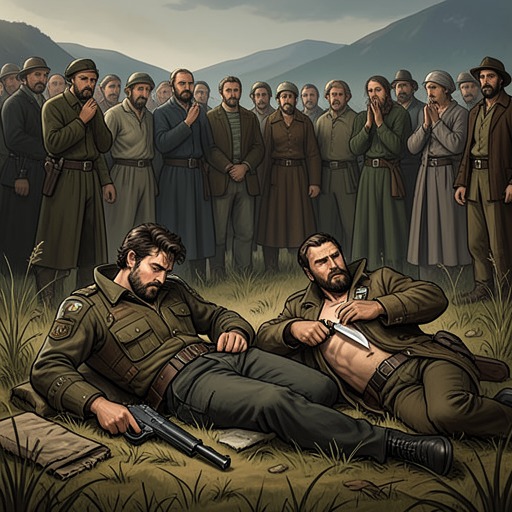
The decisive moment comes in the crypt. Markina has Jonan’s pistol and is aiming it at Amaia when shots ring out from the entrance. Iriarte, soaked through, has fired at close range; Markina falls face down beside Amaia, blood spreading across his gray suit. Iriarte crosses to her and asks whether she is all right. Amaia takes the pistol from Markina and tells Iriarte that Markina killed Jonan. Iriarte confirms it with a tight-lipped nod. The scene joins the case’s investigative and personal strands: the weapon associated with Jonan’s murder is in Markina’s hand, the killer is stopped before he can shoot Amaia, and Iriarte’s action gives his colleague the chance to name the truth aloud.